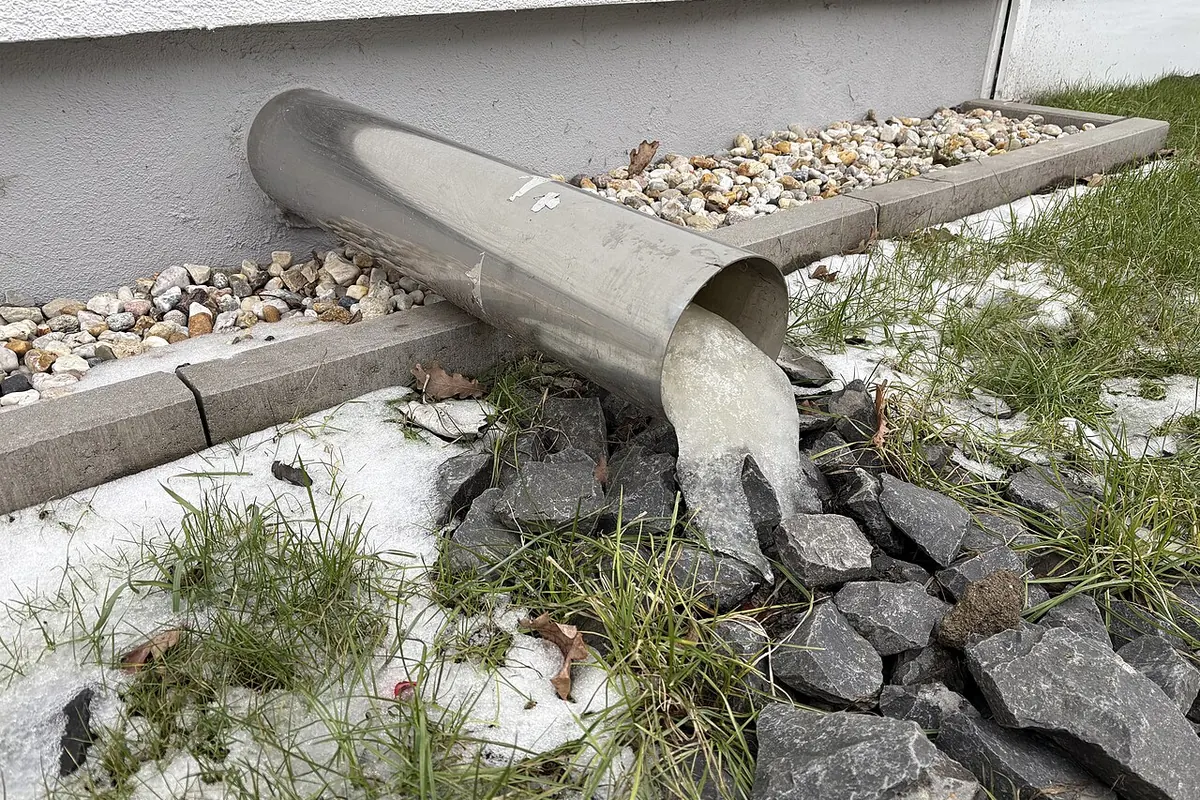
Winter is its own claim season
North Dakota winters are long and very cold, and they produce a distinct set of property claims. When people remember the March 1966 blizzard, they remember drifts that buried buildings. Most winter claims are smaller, but they can still be expensive: a burst pipe behind a finished basement wall, a stubborn ice dam that soaks a bedroom ceiling, or a pole barn that buckles under heavy, wet spring snow. This guide covers the three big winter loss types, what you are expected to do to limit damage, and how to document a claim while conditions make inspection hard.
Ice dams
How they form
Heat escaping through the attic warms the roof deck and melts snow on the upper roof. The water runs down to the colder eaves and refreezes, building a ridge of ice. More meltwater backs up behind that ridge and works under the shingles, into the walls and ceilings below.
How policies tend to treat them
Many homeowners policies cover sudden water damage to the interior caused by an ice dam, while treating the ice dam itself, or long-term seepage, differently. Some policies have specific language about freezing, ice, and the weight of ice and snow. Read your policy, and note whether the insurer is disputing the cause or only the amount.
What to document
- Exterior photos of the ice ridge and icicles at the eaves, with dates.
- Interior photos of stains, drips, bubbling paint, and wet insulation.
- Moisture readings if a mitigation company takes them.
- Whether ice and water shield was installed at the eaves, if known.
Frozen and burst pipes
Pipes in exterior walls, crawl spaces, garages, and unheated additions are vulnerable in a long cold snap. The damage often shows up when the pipe thaws and water flows freely.
Watch the heat conditions
Many policies limit coverage for freezing damage if the home was unoccupied and the owner did not maintain heat or shut off and drain the water system. That is a coverage issue, not an appraisal issue, but it shapes the claim. If you are leaving for the winter, read that clause before you go.
What to document
- Photograph the failed pipe section before a plumber replaces it, and keep the pipe.
- Get the plumber’s invoice describing the cause and location of the failure.
- Photograph every affected room: flooring, baseboards, drywall, cabinets, and contents.
- Save the mitigation company’s drying logs, moisture maps, and equipment records.
- Note thermostat settings and any record of heating service.
Snow load
Snow and ice add serious weight to a roof, and heavy, wet late-season snow is the most dangerous. Older outbuildings, low-slope roofs, and structures where drifting piles snow on one side are most at risk. Damage ranges from cracked trusses and sagging ceilings to full collapse.
- Photograph the snow depth and drift pattern before removal, if safe.
- Do not climb onto a loaded roof. Use a roof rake from the ground or hire a professional.
- Have a contractor or engineer document structural damage before repairs.
- Check whether the structure is listed as covered property and under which coverage.
Your duty to mitigate
Almost every policy requires you to take reasonable steps to protect the property from further damage. In winter that usually means:
- Shutting off water at the main valve when a pipe bursts.
- Calling a water mitigation company promptly to extract water and set drying equipment.
- Removing wet contents to a dry space and photographing them first.
- Steaming or carefully chipping channels in an ice dam, or hiring someone who can.
- Keeping heat on to prevent secondary freezing and mold.
Keep every receipt. Reasonable mitigation costs are usually part of the claim. Damage that grows because nothing was done may be disputed.
When the estimate falls short
Winter water claims often come back with gaps like these:
- Drywall replaced only to the water line, with no allowance for cutting to a clean seam.
- Flooring replaced in one room when it runs continuously through several.
- Insulation and vapor barrier missed in exterior walls.
- Cabinets “dried in place” when they have swollen or delaminated.
- No pricing for mold remediation where moisture lingered.
- No allowance for working in cold conditions, such as temporary heat.
Compare the estimate to your photos and the mitigation records room by room. Our claim planning tools can help you organize that review.
Timing in a northern winter
Winter compresses some timelines and stretches others. Interior water damage is easiest to document right away, while it is wet and visible. Roof and exterior work may wait until spring. Meanwhile, deadlines in your policy keep running. Suit-limitation periods are set by the policy and state law, and a frozen roof does not pause them. Check your policy and ask a North Dakota attorney about any deadline that worries you.
Flood is different
Spring snowmelt flooding, like the 1997 and 2009 Red River floods, is generally excluded from standard homeowners policies. Flood damage is covered by a separate NFIP or private flood policy. If water enters from outside at ground level, ask which policy applies before assuming the homeowners policy will respond.
Where appraisal fits
If the insurer agrees the winter loss is covered but you disagree on the amount, appraisal may be available under your policy. North Dakota Insurance Appraiser reviews winter water and snow load estimates and represents policyholders in appraisal across the state. We cannot promise an outcome, and we do not give legal advice, but we can help you see whether the gap is worth pursuing.