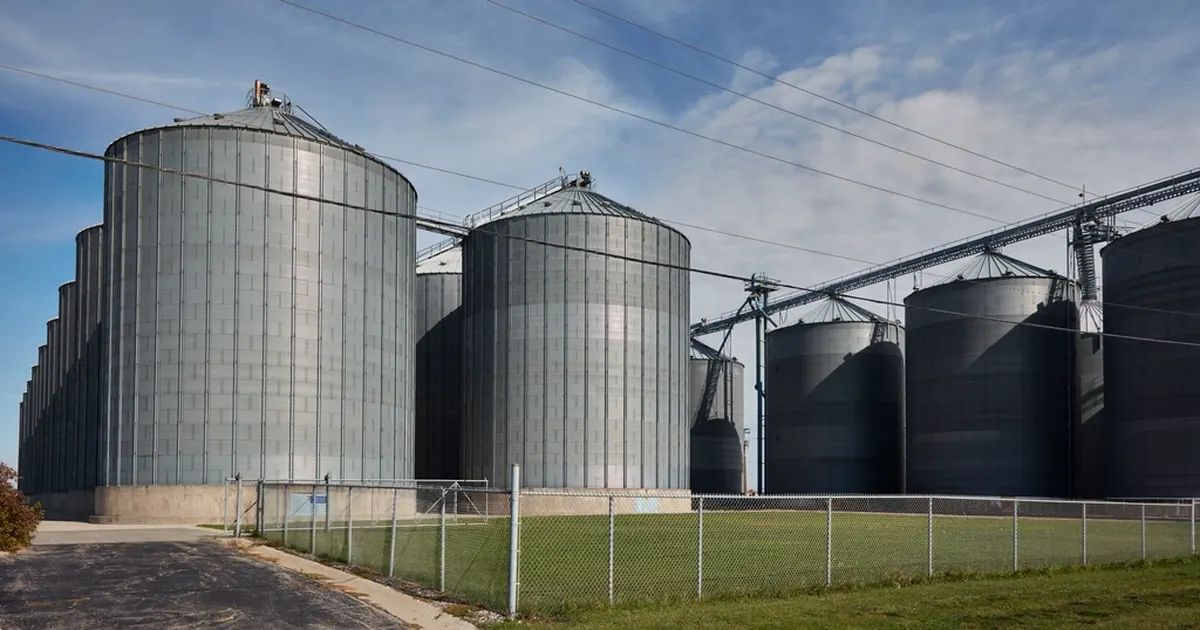
Farm buildings, farm policies
North Dakota farmsteads and ranches often have a mix of buildings: post-frame pole barns, steel Quonsets, insulated shops with concrete floors, machine sheds, livestock barns and older wood-framed barns that have stood for generations. They are often insured under a farm or ranch policy that schedules buildings individually, sometimes with different limits, valuation methods and deductibles for each. Some agricultural property, such as grain bins or equipment, may be on separate schedules or policies. Before anything else, we work out exactly which buildings are covered, for how much, and on what basis.
Where farm building estimates fall short
Steel roofs and siding
Through-fastened steel panels are the norm on farm buildings. Hail dents them, wind loosens fasteners and peels panels, and snow can buckle them. Estimates may assume a few panels can be swapped, but older panel profiles and colors may no longer be available, and new panels may not fit or match. Fasteners loosened by wind can leak long after the storm. We identify the profile, gauge and color and check whether a true repair is possible.
Framing and trusses
Post-frame buildings depend on posts, girts, purlins and trusses working together. Wind and snow can crack trusses, twist posts or pull purlins loose. These problems are easy to miss from the ground and expensive to fix properly.
Doors
Large sliding and overhead doors, along with their tracks and headers, are often damaged by wind and are costly to replace, particularly custom sizes.
Older barns
Older wood barns may be insured at actual cash value or a stated amount. Repairs can involve materials and methods that are hard to source, and the line between storm damage and age is often disputed. Whether a building is insured for replacement or actual cash value can make an enormous difference.
Rural repair realities
- Travel, mobilization and lodging for crews working far from town
- Equipment such as lifts and cranes for tall buildings
- Limited contractor availability during planting and harvest and the short building season
- Removal and disposal of damaged steel and debris
- Working around livestock, stored grain or equipment
What North Dakota Insurance Appraiser does
We review the farm policy and building schedule, then inspect each damaged structure, documenting dimensions, construction type, panel profiles, framing condition and damage. Our estimate prices the repair or replacement for each scheduled building separately, so the numbers line up with how the policy is written. If appraisal is invoked, we serve as your named appraiser and work through each building with the carrier’s appraiser and the umpire if needed.
Documentation that helps
- The farm or ranch policy, including the building schedule and endorsements
- Photos of each building before and after the loss
- Original construction invoices or kit specifications for steel buildings
- Repair bids and any engineer’s inspection
Limits of appraisal
Appraisal decides the amount of loss for covered damage. It generally does not decide whether a building is scheduled, whether an exclusion applies, or how equipment, crops or livestock are covered. For coverage disputes, talk to a North Dakota attorney. We are appraisers and estimators, not a law firm or public adjuster, and we never promise results.
Frequently asked questions
Can you appraise damage to a Quonset or pole barn?
Yes. We document panel profiles, framing and doors and price a realistic repair or replacement, including rural logistics.
My barn is old. Is it worth appraising?
It depends on how it is insured. If it is scheduled at actual cash value or a stated amount, we look at what a fair valuation would be under those terms.
Do you appraise grain bins and equipment?
Those may fall under separate schedules or policies. We can review them, but our focus is on buildings and structures.